Meal Planning & Lifestyle Principles for People with Diabetes
and What to do About Weight Gain!
2017 PREDIABETES-Symptoms and Causes - Mayo Clinic.pdf
Dietary management and lifestyle structure are the most challenging aspects of diabetes care. Keep in mind, however, that eating to control your diabetes is no different than eating for good health, something we all benefit from doing. The emphasis should be on realistic goals rather than set rules and regulations. Following is a list of key points you should keep in mind as you work towards your goal of near-normal blood glucose levels.
1. Establish consistent eating patterns
_-_Sign_Symptoms_Causes[1].jpg)
Regardless of whether you are on diabetes medication or not, you should not skip meals (really eat mini-meals and snacks). If insulin or certain oral medications are part of your treatment plan, and you skip a meal, you could have a low blood glucose reaction.
If you aren't on medication, but skip a meal, you are likely to overeat at the next meal, which could result in a high blood glucose level. Additionally, people who skip meals are more likely to miss certain food groups that are important for overall good health, as well as lowering their metabolism. People who skip breakfast lower their metabolism by about 150 calories. You use about 10% of your total energy that you consume to digest your foods and absorb the nutrients.
2. Eat a variety of healthy foods (skill #5 & 6)

Healthy Eating American Diabetes Association
Follow the diabetes food plate. CREATE YOUR PLATE FOR DIABETES: People with diabetes have the same food needs as people without diabetes.
The diabetes food guide plate is similar to the one commonly seen on cereal and bread products. There are some differences:
-
Starchy vegetables like green peas, corn and potatoes were moved out of the Vegetable Group and put into the Grains/Beans and Starchy Vegetables group.
-
Another change is that cheese was moved out of the Milk Group and is now in the Meat & Others Group. Each milk serving has 12 grams of carbohydrate as well as each fruit serving has 15 grams of carbohydrate.
-
Typical amounts of carbohydrates/meal are 45-60 grams/meal and 25 grams/snack. It is also recommended to have some healthy fats (about 5 grams) and some healthy proteins to slow down digestion of carbohydrates (see below).
-
Check out Healthy Eating On a Budget
The amounts needed from each of the food groups is as follows:
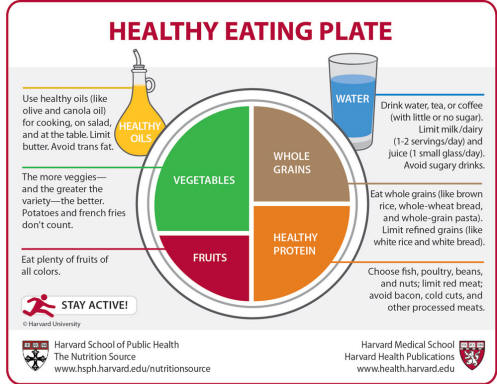
http://www.health.harvard.edu/healthy-eating-plate
CREATE YOUR PLATE FOR DIABETES:
Grains, Beans, and Starchy Vegetables - 6 or more servings per day
Fruits - 3 - 4 servings per day
Vegetables - 3 - 5 servings per day (or more)
Meat & Others - 2 - 3 servings per day (5-7 ounces/day of lowfat proteins)
Milk - 2 - 3 servings per day
Fats and Oils - only in small amounts (choose healthier varieties)
Sweets - only once in a while
Keeping a food record for a day or two, and then comparing the number of servings you eat to the number recommended by the diabetes food guide pyramid will tell you whether you are eating too much or too little of any of the food groups.
Also, remember that the recommended number of servings is for the whole day, so you might want to divide the total number by 3 to see the amount needed per meals. For example, 3-4 servings of fruit per day means 1 per meal or snack, spread throughout the day. As I mentioned, it is really better to divide the total number of choices by 3 meals and 2 snacks to help blood sugars in balance and to keep hungers in balance. Next see suggestions of how much carbohydrate foods to have.
3. Control carbohydrates

“Carbohydrates” is a general term that includes both starches and sugars. The total amount of carbohydrate is more important than the source of carbohydrate. Carbohydrates can be either refined and processed such as in soft drinks and candy, occur naturally such as in milk and fruit, and can be found in pasta, bread, rice, dried beans and peas, and starchy vegetables such as potatoes, corn or green peas.
In other words, carbohydrate in the form of cookies doesn't affect your blood sugar any differently than carbohydrate from rice (although many people notice specific sensitivities to certain types of foods, so pay attention by monitoring your blood glucose levels to see how your body responds). However, carbohydrate foods in the form of grains, fruits or milk have vitamins, minerals and fiber, while sugary foods such as cookies have little nutritional value and are often high in fat.
Therefore, the majority of carbohydrate you consume should come from the grains, fruit or milk groups. It's okay to occasionally eat high-sugar foods, but they must be substituted for other carbohydrates, rather than just added to your meal plan.
¨ One serving of grains, fruit or milk provides about 15 grams of carbohydrate and is often referred to as 1 carbohydrate choice.
¨ For most people, 45-60 grams (3 – 4 servings) of carbohydrate per meal, and no more than 15 - 30 grams (2 – 3 servings) of carbohydrate per snack is a reasonable goal.
¨ PDF SUMMARY OF SUGGESTIONS AND EXAMPLE OF VARIOUS ENERGY LEVELS AND MEAL/SNACK AMOUNTS: DIABETES MEAL PLANNING.pdf
¨ However, your meal plan should be individualized to meet your specific needs. You do that by keeping records and noticing how your body responds and seeking support to manage all of this information.
¨ Diabetes Meal Planning: http://www.diabetes.org/food-and-fitness/food/planning-meals/?utm_source=WWW&utm_medium=DropDownFF&utm_content=PlanMeals&utm_campaign=CON
4. Eat less fat and healthier types of fat

If you have diabetes you have a higher risk of heart disease, strokes, kidney failure, blindness, and other micro and macro vascular complications, therefore, you are encouraged to eat a low fat and high fiber diet. Choose foods that are lower in fat, use lower fat cooking methods and limit the amount of extra fat added to foods. Also visit point #8 below to see about raw and fresh foods.
5. Eat more fiber

Fiber is part of a healthy diet and most people do not eat enough of it and and Focus on Fiber ideas. Fiber is found in plant foods including whole grain breads and cereals, fruits (not juice), vegetables and dried beans and peas.
The recommended intake is 21 to 38 grams per day. The fiber content is listed on the Nutrition Facts label so it is easy to calculate your intake. Keep a food record to see how much fiber you are eating in a day. If you find you are eating too little fiber, increase your intake slowly and be sure to drink plenty of fluids (8-10 cups/day).
6. Maintain a reasonable body weight
If you have been told to lose weight, be aware that a moderate weight loss of 10-20 lbs is beneficial for blood glucose control. In other words, a small weight loss can provide large returns in terms of your blood glucose and the quality of your life.
To lose weight you need to watch portion sizes - using measuring cups and spoons to measure foods (or use bowls or cups of known amount) and beverages for a week or so to be sure you are eating reasonably sized portions. Please see #8 below for additional ideas.
7. Additionally, regular physical activity - 30 minutes per day - will help with weight loss as well as improve blood glucose control. Visit also the American Diabetes Fitness section! Check out the additional resource below on Exercise & Physical Activity.

 This is one
of the most challenging areas to manage. Frequently people with diabetes
have also had their bodies become less physically able to move about (due
to increased weight and degenerative joint diseases, and fibromyalgia, which
lead to increased pain). The side effects of oral hypoglycemic
medicines and insulin (and frequently medicines for depression and other mental
or neurological imbalances, and steroids to relieve joint pains and arthritis)
are to automatically cause weight gain! First check with a pharmacist to see
which of your medications might cause weight gain. To address the challenge try out:
This is one
of the most challenging areas to manage. Frequently people with diabetes
have also had their bodies become less physically able to move about (due
to increased weight and degenerative joint diseases, and fibromyalgia, which
lead to increased pain). The side effects of oral hypoglycemic
medicines and insulin (and frequently medicines for depression and other mental
or neurological imbalances, and steroids to relieve joint pains and arthritis)
are to automatically cause weight gain! First check with a pharmacist to see
which of your medications might cause weight gain. To address the challenge try out:
-
Eating more raw or fresh foods. There is an excellent concept called VOLUMETRICS by Dr. Barbara Rolls (see my Additional Pyramids and Resources section). It suggests to eat more vegetables in any way possible, especially in salads, eaten raw, or in broth-based soups. You can eat LOTS of low-starch veggies in a variety of healthy ways. Check out Skill #6 for healthy recipes.
-
There have been several new studies to support a vegetarian low fat diet regarding diabetes can help with weight loss and blood sugar control. Although you do not want to go below 30 gm of CHO per meal. So a proven way to help manage weight and blood sugars is to follow a healthy vegetarian style of eating. For ideas on vegan nutrition click here. Dr. Neal Barnard has a program for preventing and reversing diabetes. It focuses of a very low fat vegetarian diet (similar to the work of Dr. Dean Ornish). He has written a new book that you can explore at this link: http://www.nealbarnard.org/books/diabetes/ It many recipes too. This site has great recipes http://fatfreevegan.com/ Another terrific resource is www.vrg.org. One concern is to make sure you eat enough omega 3 fatty acids by consuming fish, fish capsules, flax oil, and/or walnuts on a regular basis. Some people find that they are sensitive to developing depression if they avoid all fats. Check out point #4 above.
-
-
Remember that eating more SLOWLY helps us consume about 10% less food.
-
Think about weighing and measuring your food portions again, just to verify if your eyes are still estimating accurately.
-
Perhaps use some of the Internet-based food diary food journal and physical activity programs (see bottom of the article for websites).
-
Many health conditions cause weight gain: underactive thyroid (small percent), Cushing syndrome, and Polycystic ovarian syndrome PCORS--Polycystic Ovary Syndrome--see Wikipedia: http://en.wikipedia.org/wiki/Polycystic_ovary_syndrome and Women's Health.gov http://womenshealth.gov/publications/our-publications/fact-sheet/polycystic-ovary-syndrome.cfm
-
Many medications affect brain biochemistry and perceived hunger which causes weight gain: steroids, antidepressants (some cause weight gain more than others), antipsychotics, bipolar medications, antiseizure medications, diabetes medications (drugs increase appetite), high blood pressure medications (by making you very tired), and heartburn medications.
-
Consider increasing your physical activity, no matter how physically limited you feel. Try out:
 Exercise
& Physical Activity: Your Everyday Guide from the National Institute on
Aging. This guide can
help you take charge of an important part of your health. You may want to
read through the entire book first to learn about the benefits of exercise
and physical activity, and to find out how to get started, reduce your
risks, and reward your progress. Then, keep it handy so you can refer to the
sample exercises and use some of the charts at the back of the book to
record your activities. From time to time, you may need to check the tips
for getting back on track if there’s a break in your routine or the tips for
healthy eating. Throughout the guide, you’ll find personal stories that we
hope will inspire you to be more active every day. GET A FREE GUIDE:
EXERCISE AND PHYSICAL ACTIVITY:
https://go4life.nia.nih.gov/exercise-guide
https://www.nia.nih.gov/health/exercise-physical-activity
Go4Life DVD – Everyday
Exercises from the National Institute on Aging:
https://go4life.nia.nih.gov/
Exercise
& Physical Activity: Your Everyday Guide from the National Institute on
Aging. This guide can
help you take charge of an important part of your health. You may want to
read through the entire book first to learn about the benefits of exercise
and physical activity, and to find out how to get started, reduce your
risks, and reward your progress. Then, keep it handy so you can refer to the
sample exercises and use some of the charts at the back of the book to
record your activities. From time to time, you may need to check the tips
for getting back on track if there’s a break in your routine or the tips for
healthy eating. Throughout the guide, you’ll find personal stories that we
hope will inspire you to be more active every day. GET A FREE GUIDE:
EXERCISE AND PHYSICAL ACTIVITY:
https://go4life.nia.nih.gov/exercise-guide
https://www.nia.nih.gov/health/exercise-physical-activity
Go4Life DVD – Everyday
Exercises from the National Institute on Aging:
https://go4life.nia.nih.gov/
-
Explore managing your stress and distress in healthy ways. Explore the New Discoveries of Environmental Factors that Influence How Much We Eat
-
Practice compassion for yourself during these extremely challenging times and learn Ways to Love Your Body. Remember We All need Someone's Loving Care & Concern.
-
Lastly, use the services of a diabetes care manager to help with intensive monitoring of your weight, blood sugars, HA1c, diabetes medication use, foods (and different meal plans), and food spacing, as well as self-care, stress management, and daily self nurturing strategies.
-
You may also find it valuable to use counseling to help you explore your lifestyle issues (Essential Skill #10).
-
Visit Kaiser Permanente's website to discover how to manage diabetes.
Additional Resources
Diabetes and Drug Use:
Here is a centralized resource that explores the dangerous relationship between diabetes, alcohol and other drugs.
Because of this, we engaged with researcher Dr. Karen Vieira, PhD MSM to create a comprehensive resource on the
implications, contraindications and the latest research regarding substance abuse and diabetes.

The result is this page, which can be navigated by mousing over the “Skip to Section” button:

http://drugabuse.com/guides/substance-abuse-and-diabetes/
|
Please note: I list many Websites as resources. I have not participated in the development of any of the sites, and cannot endorse any products or supplements they sell or services that they promote or contain.
Hope Warshaw MMSC, RD, CDE is a certified, nationally known diabetes educator and the author of many books that promote practical and delicious ways to discover and apply healthful eating in a hectic world.
Hope is most well known for her expertise in the areas of diabetes nutrition management and healthy restaurant eating. For nutrition and diabetes information: http://hopewarshaw.com/faq Too discover Hope's wonderful straight-talking books: http://hopewarshaw.com/books Hope also has a healthy eating and living well BLOG: http://hopewarshaw.com/blog |


Diabetes Mellitus Information and Treatment Supply
http://www.diabetesmellitus-information.com
Description: Complete Information on Diabetes, Types, Treatments Available.
Recommended Herbs, Foods, Vitamins, Minerals and Exercises